

SE in Taiwan
Home/SE in Taiwan/Helping Spinal Cord-injured Survivors Develop Their Potential to Start a Second Life



Helping Spinal Cord-injured Survivors Develop Their Potential to Start a Second Life


Through the window, the afternoon light was spreading on the public area of Taoyuan City Potential Development Center for Spinal Cord Injury, where several injured survivors were talking. In the rehabilitation room, there is someone who is practicing moving himself from the wheelchair to bed, and someone is patiently waiting for muscle strength training. There is no pressure atmosphere, but with a safe and trusting environment. For many people who have fallen into a slump due to an accident, this is a starting point to re-learn life and reintegrate into society.
The birth of the Center is from survivors with spinal cord injuries. They noticed that there was no proper place for injured survivors to learn and rebuild their lives. Many suffered from bedsores due to a lack of care skills, and some were even confined to their homes for years. It wasn't until Chairman, Mr. Lin Jin-xing, and his partners asked for fundraising from the society that they built this training with hopes.
The Center has 53 staff members so far, 39 of whom are spinal cord-injured survivors, providing peer support and companionship to people with spinal cord injury.
Life-Rebuild and the First Mile of Returning Workforce
There are about 1,400 new cases of spinal cord injury every year, with the average age being 27. The spinal cord is part of the Central Nervous System (CNS); once damaged, it often affects the function of the lower body or four limbs, requiring most people to rely on wheelchairs for a long period. Such a life-altering event depressed and withdrew the injured individuals. The Center's mission is to provide an accessible environment and offer free training courses to help individuals build self-care skills, shift their mindset, and ultimately reintegrate into society and return to the workforce.
In the life skills training department, the trainees repeatedly practice how to eat, change clothes, and use assistive devices. The seemingly easy actions are not easy for them. Mr. Liu Cheng-chi, the director of the Center, pointed out that many trainees had been injured in their Young and Middle Ages. "The challenges they face to go back to the workforce are not professional skills but whether they can take care of and adjust themselves to their working environments." Through a 12-week life-rebuild course, the trainees gradually build the ability to care for themselves and to communicate their accessibility needs to employers, thus gradually regaining their confidence.
It's not only about learning skills but also about psychological reconstruction. Many trainees went from initial inferiority and resistance to opening their hearts after seeing everyone's efforts, beginning to believe: "Although I'm different, I still have strength."
The Courses Keep Pace with Times, and Self-Employment Increases Employment Options
On the other hand, although the spinal cord-injured survivors have physical limitations, they are unaffected in cognitive and learning abilities. Over the years, the Center has continuously evolved with the times, offering a variety of courses suitable for people with spinal cord injuries. From early courses in computer typesetting, industrial wiring, web design, and jewelry design to current programs in AI generation, short video production, and even training online tutors to support education in rural areas.
Mr. Liu Cheng-chi shared that although not everyone could enter the relevant industry after the courses, they learned skills in computing and communication that can be used in different jobs. Many injured survivors who trained at the Center have become managers at other spinal cord injury associations elsewhere. So far, over half of the managers at the spinal cord association around Taiwan have been trained in the Center.
The Center also develops self-employment businesses. Through job redesign, it provides more employment options to the injured survivors, including toner cartridge recycling and refilling, coffee roasting, web design, telephone customer service, etc. The telephone customer service has cooperated with Taiwan Teleservices & Technologies Co., Ltd. for over 10 years to provide stable job opportunities. Although those self-businesses have limited profits, "the point is that those jobs give the injured survivors salaries and self-achievement. It also shows outside that they can not only accept help but also can give something back to society," Mr. Liu Cheng-chi said firmly.
The Multi-Employment Promotion Program Enables People with Disabilities to Serve People with Disabilities
The Multi-Employment Promotion Program of the Ministry of Labor acts as a significant contributor throughout the Center's development. Since participating in the Program, the Center has employed a total of 52 people. Mr. Liu Cheng-chi said, "This Program allows us to cultivate more people with disabilities to engage in peer support and practice, "people with disabilities to serve people with disabilities." This not only supplements the Center's manpower but also allows participants to achieve personal growth through the service process.
There is a "Peer Support Class" inside the training course, which gives the willing injured survivors an initial 100-hour training class. The course includes listening skills, rehabilitation knowledge, psychology support, and home visiting practice. After the training course, led by senior colleagues, the trainees started assisting visitors to visit hospitals, home care, and telephone care. Until they can operate by themselves independently, they can become a visitor. In the past 3 years, the number of people visited by home visitors has ranged from 2,972 to 5,400, with new cases over 200 per year.
It's not only about growth in numbers, but means there are more new spinal cord injury survivors who can meet "people who understand them" in time during their most confused moment! When survivors who have just suffered misfortune see the visitor coming to their side in a wheelchair, they often think, "If he can do it, then I can too." Through the years, with the visitors who were subsidized by the Multi-Employment Promotion Program, the Center has assisted over 3,000 spinal cord-injured survivors for life-rebuilding.
More importantly, since many survivors performed very well, they were retained for employment in the Center after the program ended, becoming life-rebuilding trainers, coffee roasters, or project managers. Some of them switched to selling assistive devices after leaving the rehabilitation, or started their own companies that renovate accessible spaces, proving that there are still endless possibilities in life after rehabilitation.
From Accepting Help to Helping Others, the Trainees Keep Creating Values
Mr. Liu Cheng-chi stated that the Center has always insisted on providing free training and accommodations for trainees since its inception to lower the learning threshold. Although raising funds is not easy, if we can help even one injured survivor regain their confidence and return to the workplace, we can not only reduce care and medical expenses but also generate monthly income and give back to society with immeasurable value.
As well as being a spinal cord-injured survivor, Mr. Liu Cheng-chi, who has been closely called "Buddy Chi," said, "I was also starting from life-rebuilding and Career training in the Center. Along with being an assistive device repair specialist, customer service representative, home visitor, case manager, and trainer. Like most of my colleagues, I started as someone being served, and then transitioned to providing that service."
For 20 years, the Center has proved that "life after injury doesn't mean losing futures." The injured survivors here are not passive individuals seeking help; rather, they are a group of self-supporting people who assist each other, continue to develop their potential, and create value.
The Official Website of Taoyuan City Potential Development Center for Spinal Cord Injury
Mr. Huang Ren-xiang: Walking Out of the Injured Shadow and Becoming Others' Supportive Power
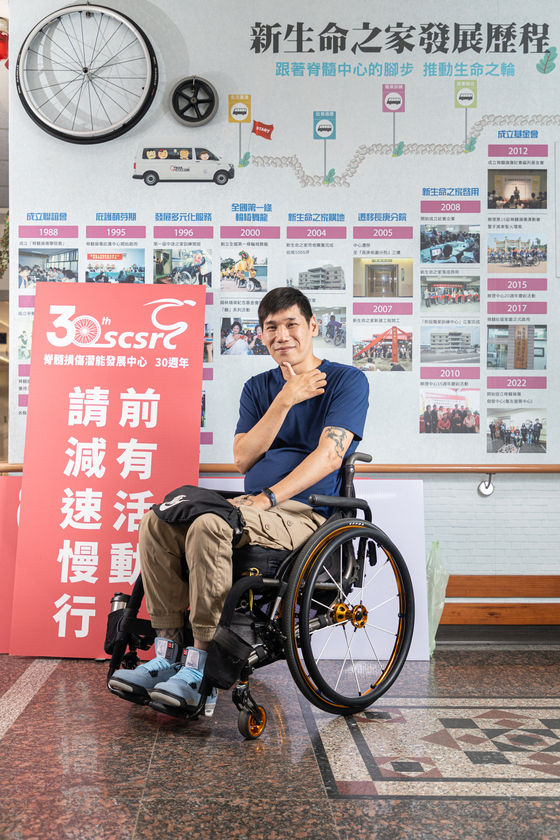 Mr. Huang Ren-xiang, a former deliveryman, left his job after being injured in an accident. During that moment, he didn't want to see family members and friends, deleted all his social media accounts, and isolated himself. He gradually walked out of the haze until he came to the Taoyuan City Potential Development Center for Spinal Cord Injury.
Initially, he only joined the life-rebuilding course, but he couldn't accept his condition. In 2019, the Center joined the "Multi-Employment Promotion Program," which required new staff. He was willing to serve as a home visitor and started visiting newly injured survivors. "Although I often encouraged others to go outside, I actually didn't persuade myself at that time."
It wasn't until he returned to Hualien and mustered the courage to confess his situation to an old friend that he truly felt he had taken that step. This job is not merely his first job after being injured, but more like a healing opportunity for him.
So far, Mr. Huang Ren-xiang has worked in the Center for 6 years as a project leader to assist new staff. Over the last few years, he has also pursued a degree in social work at the university and completed courses in long-term care and childcare to better serve fellow injured people.
"The injured survivors' services seem easy, but since you are facing people, you need to keep learning," said Mr. Hung. From self-isolation to accompanying others through their difficult times, his life has gained richer meaning.
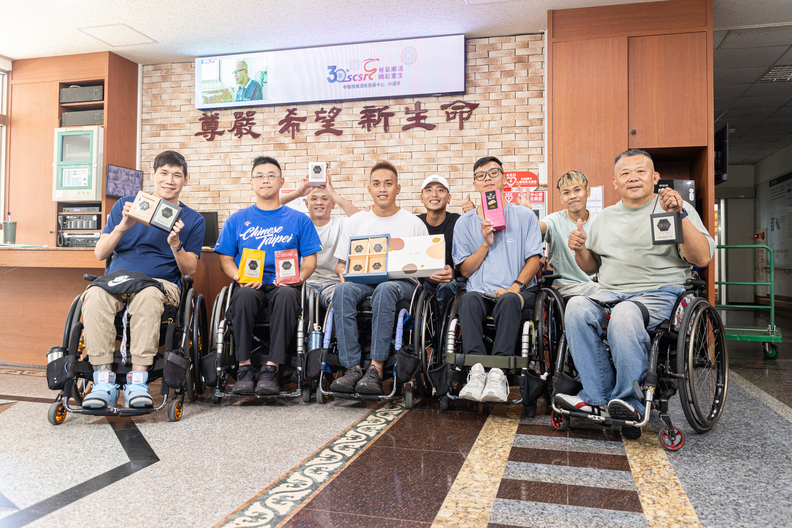
▲Taoyuan City Potential Development Center is a social welfare association, career training organization, and social enterprise that helps injured survivors reintegrate into society through participating in production.
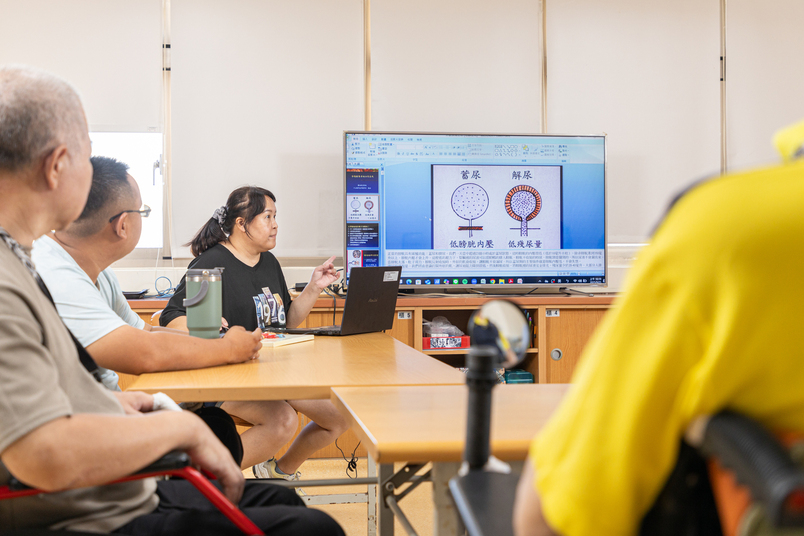
▲The Center offers the 12-week life-rebuilding course to help injured survivors build self-care skills and shift their mindset to overcome the fear of the first step toward reintegrating into the workforce.
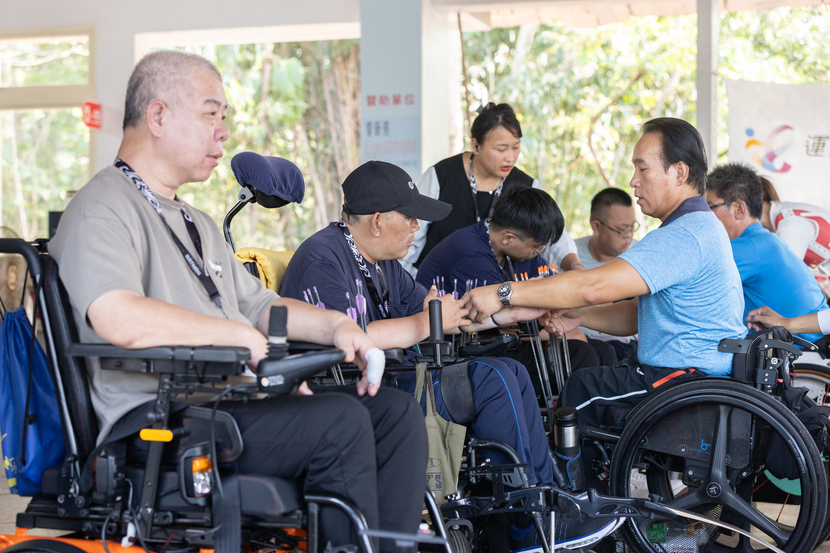
▲The Ministry of Labor's "Multi-Employment Promotion Program" allows the Center to supplement the manpower, and cultivate more injured survivors into peer support and practice "people with disabilities to serve people with disabilities."
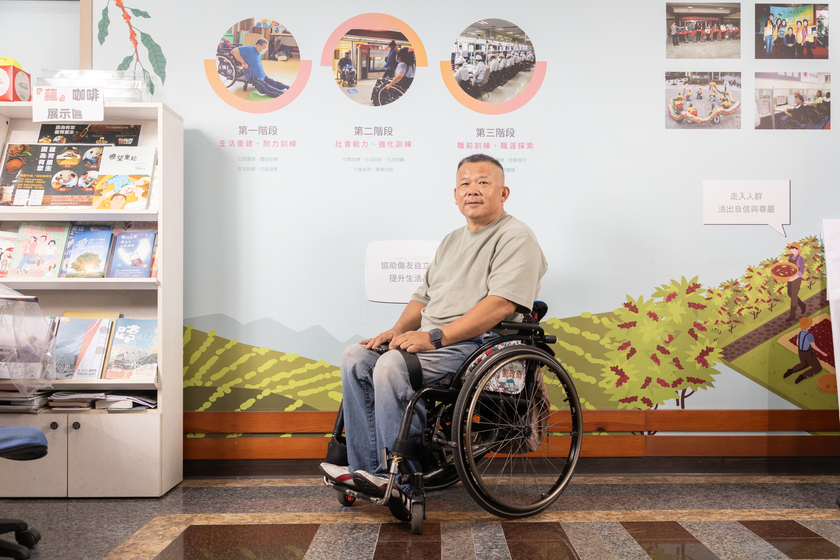
▲Mr. Liu Cheng-chi, the Director of Taoyuan City Potential Development Center for Spinal Cord Injury, as a spinal cord-injured survivor, said, "Most staff like me, they were the people who were served and then as the people who serve others."
Case story: Multi-Employment Promotion Program
Interviewee: Taoyuan City Potential Development Center for Spinal Cord Injury

This work is licensed under a Creative Commons Attribution-NoDerivatives 4.0 International License.
Please attribute this article to“Workforce Development Agency, Ministry of Labor.”